Showing posts with label Basics. Show all posts

Saturday, December 22, 2018

December 22, 2018

Impedance Formula and Theory Explanation

Impedance Formula and Theory

Impedance Formula and Theory Explanation, what is impedence

When we talk about AC circuit the term Impedance comes. Impedance is a very known term to us. Today we are going to know Impedance Formula and Theory with the explanation. In AC circuits impedance always present.

Understanding What is Impedance practically:


To better understand the Impedance we should know about Inductive Reactance and Capacitive Reactance.
We know that resistor has the property of opposition to the flow of current. But how inductor and capacitor oppose the flow of current? let's know.

Inductive Reactance:

The property of an inductor by virtue of which it offered opposition only to the flow of alternating current is called Inductive Reactance.


Remember that inductive reactance only exists in the AC circuit, not in DC.
Actually, each Inductor has a property of opposition to the flow of current (AC & DC both) according to their material property, this is called resistance. But inductance reactance property only exists when the AC apply to it.
So we can say the capacity of an Inductor to oppose the flow of current in AC circuit is greater than the DC circuit.

Capacitive Reactance:

The concept of capacitive reactance is same as inductive reactance.
The property of a capacitor by virtue of which it offered opposition only to the flow of alternating current is called Capacitive Reactance.
Capacitive reactance also does not exist in DC circuit.


Reactance:

If an AC series circuit containing only Inductor and capacitor do not contain Resistor, then the opposition offered by the combination of inductor and capacitor to the flow of alternating current is called Reactance(X).

Impedance:

A series AC circuit which containing Resistor, Inductor, and Capacitor. Now the opposition offered by the combination of Resistor, Inductor, and Capacitor to the flow of AC current which flows through it is called Impedance.

Now let's go the Impedance Formula.

Impedance Formula:

The basic impedance formula is, 


As the resistance=R, and the reactance=X
so the angle between voltage and current of the circuit will be,


Read Also: All Inductance Formula Analysis


For a purely resistive circuit, the impedance will be, Z=R
For a purely Inductive circuit, the impedance will be, Z= XL
For a purely Capacitive circuit, the impedance will be, Z= XC

For the R-L circuit, 
Impedance Formula and Theory Explanation, series R-L circuit

The  reactance=inductive reactance
so the impedance formula will be,


For the R-C circuit,
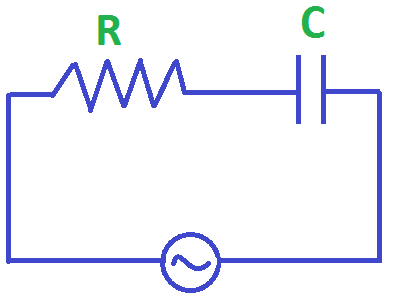
Impedance Formula and Theory Explanation, series R-C circuit

The reactance=capacitive reactance
so the impedance formula will be,

For the R-L-C circuit,
if XL>XC

impedance, 


If XL<XC
impedance,

If XL=XC
The impedance, Z=R

The impedance formula in complex form,
Impedance Formula and Theory Explanation


Thank you for visiting the website. keep visiting for more updates.

Friday, December 21, 2018

December 21, 2018

All Inductance Formula Analysis

Inductance Formula Analysis

All Inductance Formula Analysis, inductor

An inductor is a passive element. The inductor is used in all electrical circuits. We already posted an article about Inductor and Inductance you can read. Today we are going to know all Inductance Formula. Inductance formula is very very important for us.
So let's start Inductance Formula from basics.

We already know that when the flow of current through a coil is changing with time an EMF is induced in the coil and the induced EMF is proportional to the rate of change of the flowing current with time.

so we can write,


Now, 

Here L= Inductance
This is the basic inductance formula.

The equation of current in Inductor is,


The formula of power in Inductor is,


The energy storing formula of Inductor = 

The Formula of self-inductance,
Here, L= self-inductance
         N= No. of turns
         l (small L)= length of the wire
        A= area of each turn
So we can write,

Inductance Formula of Series Inductor circuit:


All Inductance Formula Analysis, inductor in series


If a circuit consists 'n' no. of inductors in series then the equivalent inductance of the circuit will be,
We know that the voltage drop across in one inductor is,

So according to Kirchhoff's Voltage Law, the total voltage drop across the circuit will be,
Now we can write,

Inductance Formula of Parallel Inductor circuit:


All Inductance Formula Analysis, inductor

If 'n' no of inductors are connected in parallel the equivalent inductance will be,
As it is a parallel the voltage across each inductor will be the same, but current will be different.
The current in each inductor is,
                                L1=i1, L2=i2, L3=i3, Ln=in

According to Kirchhoff's Current Law,

     The total current               i=i1+i2+i3+.........+in


Now,


These are the Inductance Formula.

Read Also:

Thank you for visiting the website. keep visiting for more updates.

Sunday, October 14, 2018

October 14, 2018

Amazing explanation to understand : What is Inductor, What is Inductance, Inductor Types, Use of Inductor.

What is Inductor, What is Inductance, Inductor Types, Use of Inductor.


 What is Inductor, What is Inductance, Inductor Types, Use of Inductor.


Most of Student, as well as most of the people, have many questions about Inductor, like What is Inductor? What is Inductance? Types of Inductor and Use of Inductor.
Even after reading many books, blogs we have many doubts about the basics of an Inductor. Before reading the details about an Inductor we must have clear knowledge about the basics of an Inductor.
We do always try to focus to give basic knowledge.

In this post, we only discuss the basics of an Inductor. Let,s known, What is Inductor?
                               A simple wire having a number of turns can be called an Inductor. You may have a question that why it is called inductor. The answer is because it has the property that is called Inductance. Now you have one more question that what is Inductance? The answer is Inductance is a property of a conductor which try to oppose the change in current which flows through this conductor. 
                            
                            Now, this is the time to know how it opposes the change in current (This 'change in current' means the changes in magnitude or direction). When a current flowing through any conductor or wire it creates some magnetic flux. If the current not changing then the produced flux also constant. If the conductor having a number of turns and the current is changing then an EMF will be Induced as the flux linking with the turns changes. This induced EMF will try to oppose current. 
Actually, Inductance can be called as Self Inductance. In the case of DC, the current is constant so the inductance property does not exist. But in the case of AC, the magnitude and direction of current not constant so the Inductance exists. 

                         One very important thing that when we give DC supply to an Inductor flux will be produced. Then it is called an Electromagnet.
An inductor is a passive element. It can store energy in the form of the magnetic field. It can block the AC.
The unit of inductance is Henry.

Application of Inductor:

(1) It is used in filter circuits.
(2) It is used as an electromagnet.
(3) It is used in resonance circuits.

In this post, we only discussed What is Inductor? What is Inductance? Application of Inductor which is a very important topic before reading the details of an Inductor. 

Read also:


Thank you for visiting the website. keep visiting for more updates.

Saturday, October 13, 2018

October 13, 2018

What is capacitor, how does a Capacitor works, types of capacitor, application of capacitor

What is capacitor, how does a Capacitor works, types of capacitor, application of capacitor.


What is capacitor, how does a Capacitor works, types of capacitor, application of capacitor
image from www.maxpixel.net


A capacitor is a passive element, which uses in both electrical and electronic circuits.
A capacitor is an element which can store charge. The function of a capacitor is charging and discharging in a few time. Let's what inside a capacitor and how it works.

A capacitor has two metallic plates. And there is a dielectric material between the two plates. When the capacitor is connected to a voltage source, an electric field is created. positive charges are collected by one plate and negative charges are collected by another plate. So a capacitor store charge by creating an electric field. when a capacitor collects charge is called charging and when the capacitor releases the charge is called discharging.
symbol of Capacitor, symbol of various capacitors, capacitor symbol


The amount of electrical energy stored by the capacitor is called capacitance of that capacitor. The unit of capacitance is Farads(F).
If the capacitance is C, the applied voltage is V, and the charge is Q then
                                                          C=Q/V

various types of capacitor, different capacitor, types of capacitor,capacitor types


There are many different types of capacitor,

1. Ceramic capacitor
2. Electrolytic capacitor
3. Polystyrene Film Capacitor
4. Polycarbonate capacitor
5. Polypropylene Capacitor
6. Glass capacitors
7. Supercap
8. Silver Mica Capacitor
9. Tantalum capacitor
10. Metallised Polyester Film Capacitor

Application of capacitor,

1. The capacitor is used for filtrate DC output of the rectifier.
2.  The capacitor is used for audio frequency coupling.
3. The capacitor is used in Tuned circuits.
4. The capacitor is used for power factor improvement.

Read Also:


October 13, 2018

What is Electric Shock, When we get electric shock, What causes an electric shock Current or voltage ?

What is Electric Shock, When we get electric shock, What causes an electric shock Current or voltage?


Electric shock is the much-known word to us. Let�s learn What is electric shock.
Electric Shock is the convulsion of muscles with dangerous and painful physiological effect caused by the flow of current through the human or animal body.

When human or animal get an electric shock?

What is Electric Shock, When we get electric shock, What causes an electric shock Current or voltage ?
The person did not get shocked

When the human body comes into contact with the electric energy they will get an electric shock. In other words when an electric circuit short by the human body, the current will flow through the body then they get an electric shock. Lets it explain, when we are standing on the ground and if our body comes into contact with phase wire then the current flow through our body and goes to the ground. 

Which is the cause of electric Shock current or voltage?

Some people have confusion that which is the cause of electric Shock current or voltage, let�s know about it.  We know that when current flow through our body, we felling shock. From the Ohm�s Law, we know that the flow of current depends upon the voltage and resistance. 
                                                                            I=V/R
Our body has some resistance which is fixed, so the flow of current through our body depends on the voltage only. So current will flow through our body if there is sufficient voltage. So the voltage or potential difference is the cause of electric shock.
What is Electric Shock, When we get electric shock, What causes an electric shock Current or voltage ?
The person gets shocked

It has been found by experiment that when the frequency of alternating current is very low the current above 200mA causes certain death with severe burns.

You should be taken following precaution to avoid electric shock:

1. Avoid water when working with electricity. Because moisture and water can conduct electricity.
2. Always work with insulated tools.
3. Always use insulated rubber gloves and goggles while working.
4. Never use damaged insulation or broken plugs.
5. Always turn off mains while working at your home.
6. Use circuit breakers or fuse in the electric circuit.

Treatment for Electric Shock:

1.  At first switch off the supply.
2. Then remove the person from the contact.
3. Treat the burns by using the proper ointment.
October 13, 2018

What is resistor, Types of resistor, application of resistor

What is a resistor, Types of a resistor, application of resistor?

what is a resistor; types of resistor; uses of resistor; resistor examples; application of resistor; resistor symbol;


The resistor is a very important, useful, basic component in electrical and electronics circuits. It is very much known to us.
Resistor: Resistor is a component which resists the flow of current in an electrical circuit.


Types of Resistor:

Resistors are basically two types-

1. Linear Resistor: If the value of resistance of the resistor does not change with the applied voltage, and temperature then the resistor is called a linear resistor.

Linear resistors are two types,
1.1. Fixed resistors (This type resistor has a fixed value that means the value cannot be changed)

Types of Fixed resistors,
1.1.1. Thick Film Resistors (the film or layer of resistance material is thick)
1.1.2. Thin Film Resistors (the film or layer of resistance material is thin)
1.1.3. Carbon Composition Resistors


What is resistor, Types of resistor, application of resistor
Carbon Film Resistor
Image from Wikimedia 


1.1.4. Wire Wound Resistors
1.2. Variable resistors (The value of this type of resistors can be changed)
Types of Variable Resistors,
1.2.1. Potentiometers
1.2.2. Rheostats
1.2.3. Trimmers


What is resistor, Types of resistor, application of resistor
Wire Wound Resistor
image from Wikimedia 


2. Non- Linear Resistor:  If the value of resistance of the resistor changes with the applied voltage, the temperature then the resistor is called a linear resistor. As the resistance changes, the current flowing through the resistor also changes according to OHM�s Law.

Types of Non- Linear Resistor,
2.1. Thermisters (it's valued changes with temperature)
2.2. Voltage-dependent resistor (VDR)
2.3. Light depended on resistors (LDR) - it's valued changes with light intensity.

Application of Resistors:


Many uses of resistors are there. The main application of resistors is current control or limiting. It can convert electrical energy to heat energy.


Read Also: